Monday, December 19, 2011

Casco Viejo


This is the Old Quarter. It's original name is San Felipe. It is often compared to Havana or Cartegena. It is on a peninsula in the southwest part of modern day Panama City. Most of this part of the city was built in the earliest days of European occupation of Panama, in the late 18th and early to mid 19th centuries. It was all but abandoned in the early 20th century as the wealthy residents moved to newer parts of the city. In 1997 UNESCO declared it a World Heritage Site, which has helped encourage restoration of buildings. The Presidential Palace and the mayor's office are both here. But the restoration is slow, and gutted buildings stand next to restored gems.

The photo of the pink house above is a great example. It is lovely, but just across the street you see the ruins of the the building where Manuel Noriega's troops fought American forces in 1989. The building was all but destroyed. It is now for sale, and is a lovely old building with a beautiful view of downtown Panama City. The view of the city was taken from up on Casco Viejo. You can also sit along the water front and watch the ships waiting for passage through the canal.

Unfortunately the beaches surrounding Casco Viejo are trashy and rocky, but the views are spectacular. We did see some children playing on the beach, and we thought the piece of an old building was fascinating.

Many of the buildings have just the facade remaining. The have steel beams inside holding up the walls, and tin shed roofs to keep some of the water out. Panama receives an average of 16 feet of rain a year, so I imagine preventing water damage to your house can be difficult. (Raleigh gets an average of about 4 feet of water a year).

More about the canal


Our first two nights in Panama we stayed across from the Miraflores Locks. The picture of the tall building in the distance is our hotel as seen from the canal. We ate dinner at the Miraflores visitor center restaurant, which is the building with the balconies. You can sit at your table and look down at the ships going the the locks. The food wasn't great, but the entrainment was. So here are photos from both sides.

After two days we moved to a hotel in the center of Panama City. We can walk around a bit, but Casco Viejo, the old city, isn't really walking distance. Casco Viejo is the biggest tourist attraction after the canal itself. We can get a cab to most anywhere. The prices can vary and they will charge you double the going rate if your hotel calls the cab. Most of the time we can negotiate the rate.

We are not finding Panama City a particularly easy place to navigate. The places we want to see are spread out. Sidewalks are bad and often torn apart, resulting in mud everywhere (it has rained every day). There is a bus system, but it isn't designed for easy use by non residents. There are also lots of very seedy areas, which tourists are encouraged to avoid. It is also not a very clean city. There are many, many buildings either half finished or abandoned, and lots of trash everywhere.

More about what we have seen in Panama City in the next post.

Saturday, December 17, 2011

Panama Canal


A full transit through the Panama Canal is something of a rarity for passengers. A partial transit is much more common, but the full transit takes place one Saturday each month. I was delighted to find that our trip with the canal trip, so I booked early.

There are three sets of locks through the canal. A full transit takes about 8 hours. Ships are charged based on the size of the ship, and the transit can cost up to $400,000, one way! Our boat was charged $3500.00. The canal is a much safer transit than sailing around Cape Horn, and saves an average of 22 days of travel!

Transit is 'first come first serve'. Ships dock either in Panama City on the Pacific side, or in Colon on the Atlantic side and wait until they are called for transit. The wait can be several hours, or several days. A ship can reserve a passages for a specific day, but they must pay in advance, and the fee is non-refundable. Cruise companies do this, of course, and any ship that has a tight time table.

A canal pilot boards each ship to pilot it through the canal. Depending on the length of the ship, one or two can go through at a time. We went through every lock with another ship.

Day transits are all one-way. The morning ships go from the Pacific to the Atlantic, and in the afternoon they go from the Atlantic to the Pacific. The large ship when went through the fist two sets of locks had to stop in Gatun Lake and wait, because it was too large and slow to make the full transit in the morning. The largest ships only go through the canal during the day. At night they allow smaller ships, and have two way transits. Each set of locks has two lanes.

Many modern ships, particularly oil tankers and some US military ships are two wide to fit through the canal. To accommodate them, a third, wider lane is currently being dug.

To go through the locks, a ships is guided into the canal. The locks (gates) behind it are shut, and then the ship is raised (or lowered at the Atlantic side). Once the water is at the right level, the locks in front are opened, and the ship goes into the next part of the canal and the process is repeated. The Miraflores and Pedro Miguel locks have two sections and the Gatun locks have three.

So, today I sailed from the Pacific Ocean to the Atlantic Ocean in 8 hours! Oh, and you can probably tell, it rains the entire day.

Thursday, August 11, 2011

A bright spot and an oddity


Here is my lone pumpkin. It actually isn't very large; about the size of a basketball, but the vine is huge with this one fruit. I'm sure the hot dry weather is keeping it from getting very large. It is the only bright spot in the garden. We have had some significant rain over the last ten days, so some plants are looking better. Lantana and cleomes are blooming again. But everything is very stressed. My crepe myrtle bushes haven't bloomed at all and the butterfly bushes have had very few blooms. Both should be beautiful all through July and August.

The oddity is my star magnolia tree. It is one of the first things that blooms in spring, and the blooms come out before the leaves. I don't know what has cause this, but it has blooms on it now, on several branches that have few leaves. It too, has been very stressed by the heat and drought this summer. But blooms in August! Very odd.

I am seriously considering re-doing the entire front yard. I'm thinking about getting rid of all the grassy areas in favor of paths and mulch, and putting in more ornamental grasses. Do any of my (few) readers know of a good software program that will let me design and play with garden layouts?

Saturday, July 30, 2011

Final harvest


Here is my corn harvest. The ears are actually very small. The biggest one is just 6" long. But the kernels are plumb and juicy. We will have corn for supper tonight. With a plot bigger than 4'x4' and normal summer weather, I could have a decent corn patch.

Everything else is gone. Squash and cucumber numbers were very low. No tomatoes at all. It has just been way too hot and dry this summer. Today is day # 55 of above 90 and day # 9 of above 100 for the summer. Not good gardening weather. Even my drought hardy plants, like marigolds and butterfly bushes look terrible.

I'm pondering changing over to cacti and yucca!

Saturday, July 16, 2011

Success!


This evening I harvested and ate my first ear of corn! It was great. Just one ear today, but within the next several days we should have several more. Here is my gardening assistant, posing with our corn.

No tomatoes this year. The new bed doesn't have rich enough soil for this terribly hot, dry year. I haven't had a single tomato, not even a tiny one. We will have to do some serious soil amending over the winter.

We are still getting squash but I think the cucumbers are about spent. Most of my flowers are sad looking too. Only the hearty drought tolerant plants, such as Lantana, Vinca, and Marigolds are still looking nice.

Monday, July 4, 2011


I haven't posted much this summer because gardening is too frustrating this year. For the second year in a row we are having incredibly hot, dry weather. Last summer was a record number of 90+ degree days. We are on track to break that record. We are also nearly 7" below normal for rain.

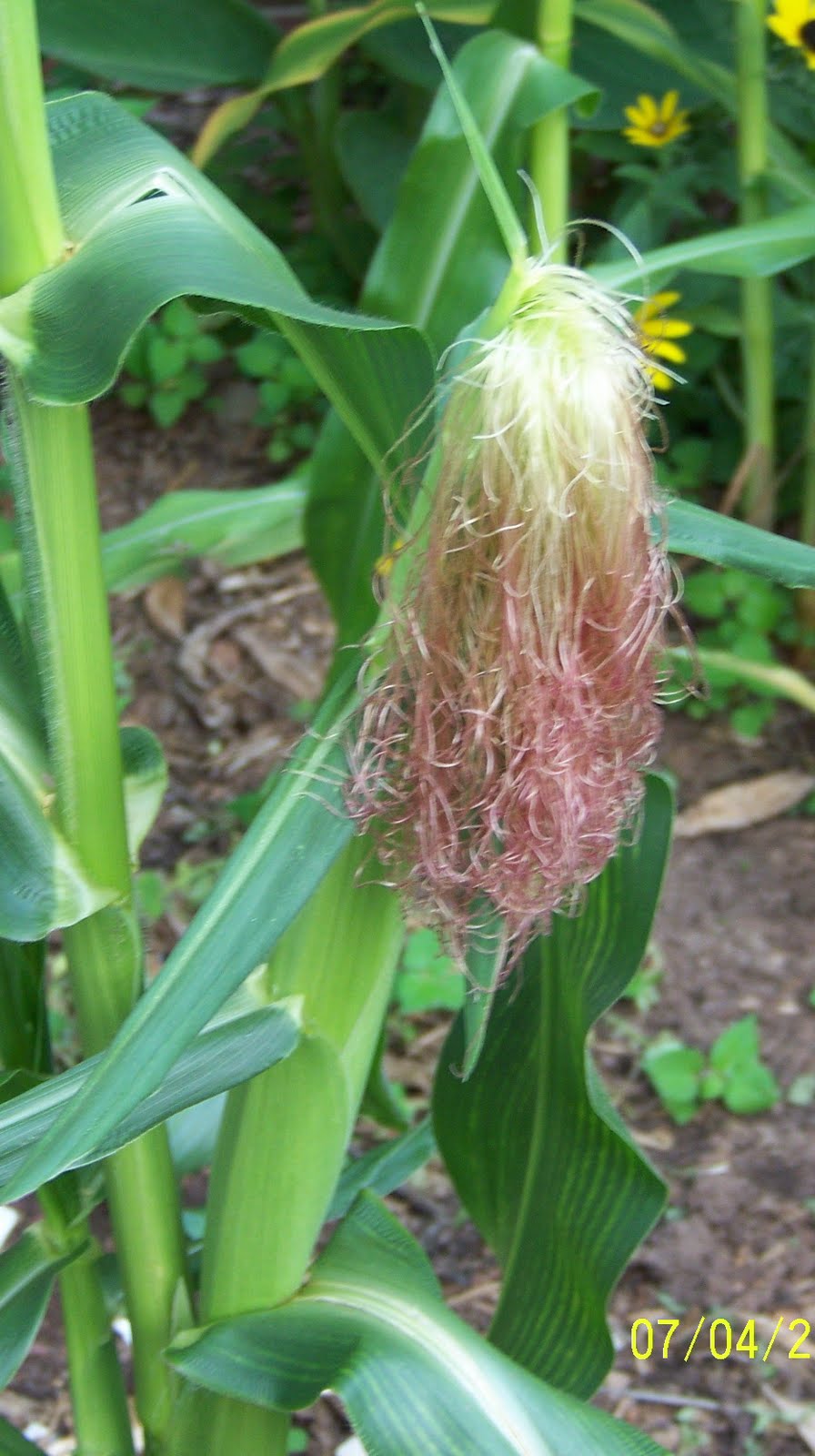
The only new thing in the garden this year is my one bright spot. I planted a small patch of sweet corn, just for the fun of it, in the front bed. It is doing pretty well. Here are pictures of our first ears. I hope to get half a dozen ears.

The other picture here is a pumpkin, in the same bed. It looks healthy enough. Our squash and cucumbers are doing well, but the tomatoes have no fruit at all.

Most of my flowers have wilted as well. Marigolds and vinca are about the only things that look good.